
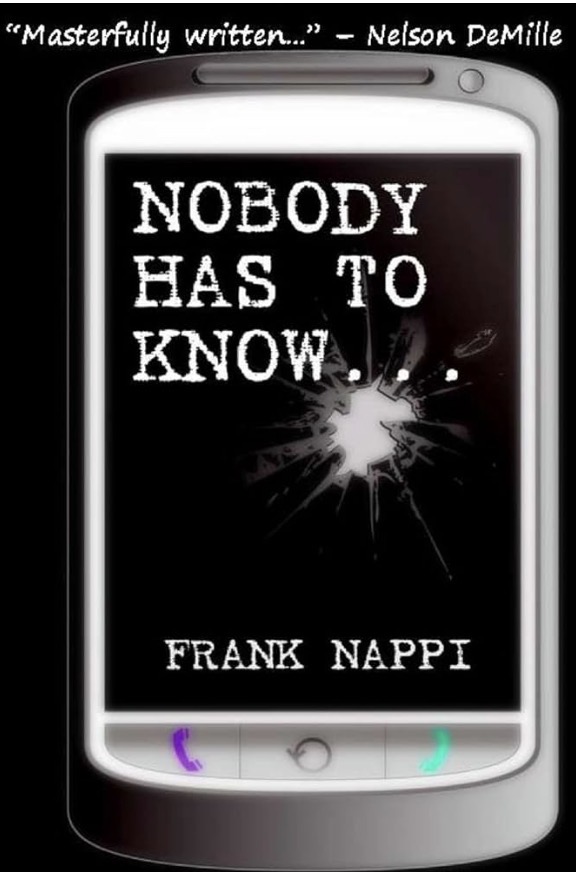
Nobody Has to Know is a gripping psychological thriller by author Frank Nappi, one that delves into the shadowy depths of forbidden desire, deception, and desperation. At its center is Cameron Baldridge, a charismatic young high school English teacher adored by his students and seemingly on the cusp of a perfect life with his fiancée, Hayley. But when Cam crosses an unforgivable line, embarking on a clandestine affair with Nikki, a vulnerable and alluring 17-year-old student, his world unravels in unimaginable ways. What begins as a moment of reckless passion spirals into Cam becoming the target of a ruthless blackmailer who stalks him through anonymous texts and emails, demanding silence and payment—or face total exposure. As the extortion escalates, involving twisted alliances, missing persons, and layers of betrayal among his students and colleagues, Cam’s carefully constructed facade crumbles. Haunted by his past traumas and driven to increasingly desperate acts, he must navigate a web of lies that threatens not just his career and relationships, but his very life. Nappi’s taut narrative, drawn from his own experiences as a longtime educator, explores the fragility of trust and the dark underbelly of human nature. With shocking twists and a chilling conclusion that defies expectations, Nobody Has to Know leaves readers questioning how well we can ever truly know those closest to us – and the devastating cost of hidden sins.
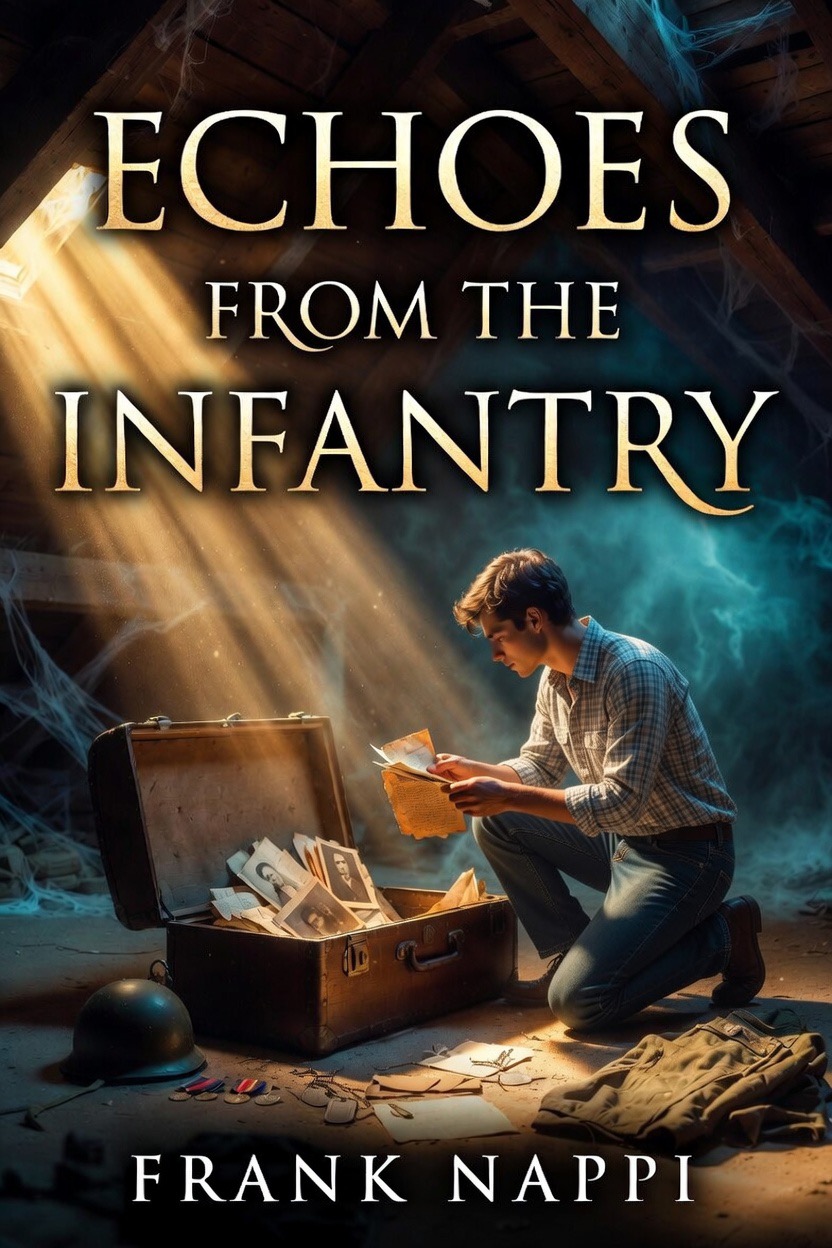
Echoes From The Infantry is the tale of one Long Island World War II veteran, the misery of combat, and the powerful emotional bonds that brought him home to Rockaway Beach and the love of his life. It is about a father and son, and their ultimately redeeming struggle to understand each other’s worlds – one a world at war, the other shaped by its veterans.
All James McCleary wants to do is forget the horrors of the battlefield. All his son John wants is to know his father. But memory is unforgiving, and James remains locked inside his own mind, unable to embrace his wife and children as he would like to. Meanwhile, John wrestles with troubling recollections of life with this enigmatic man he calls his father.
Now the death of John’s mother draws the men together for a final showdown. As he sifts through family artifacts in his parents’ attic, the disgruntled son gets a glimpse of the eternally frozen battlefields that left his father scarred – and of the quiet secret love that sustained him across the wasted expanse of wartime Europe.
In the late 1940s, the minor-league Milwaukee Brewers are foundering yet again and manager Arthur Murphy is desperate. When he sees seventeen-year old Mickey Tussler throwing apples into a barrel, he knows he has found the next pitching phenom. But not everyone is so hopeful. Mickey’s autism—a disorder still not truly understood even today—has alienated the boy from the world, and he is berated by other players and fans. Mickey faces immense trials in the harsh and competitive world of baseball while coping with the challenges inherent to his disorder. An honest and knowledgeable book about overcoming adversity, and the basis for the television movie A Mile in His Shoes, Mickey’s powerful story shows that with support and determination anyone can be triumphant, even when the odds are stacked against him.
It’s 1949 and eighteen-year-old pitching phenom Mickey Tussler is back with the rejuvenated minor league Brewers in the sequel to The Legend of Mickey Tussler (the basis for the television movie A Mile in His Shoes). Despite Mickey’s proclamation that he will never play baseball again after last season’s violent conclusion, his manager—and now a surrogate father—Arthur Murphy cajoles the emotionally fragile, socially awkward boy with autism into giving it another shot. Mickey reluctantly returns to the field and must once again cope with the violence and hatred around him. When a young African American player joins the team, the entire team is subjected to racial threats and episodes of violence, one of which Mickey witnesses firsthand. Struggling to understand such ugliness and hatred, and fearful of reprisal should he tell anyone about what he has seen, the boy’s performance on the field suffers. Mickey now must deal with a side of human nature he scarcely comprehends.
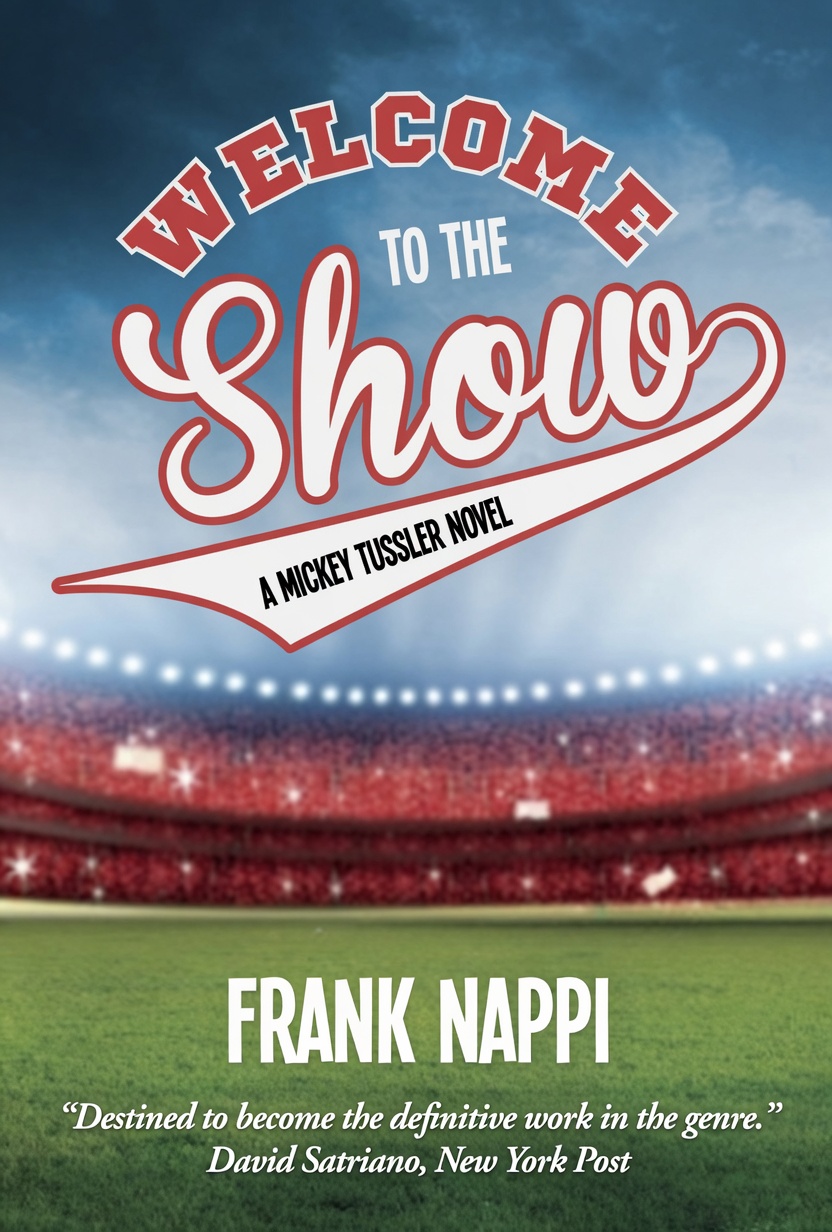
It is 1950 and Mickey Tussler, the now-famous autistic pitching prodigy with a golden arm is back for another baseball season in this third installment of Frank Nappi’s critically acclaimed Legend of Mickey Tussler series. Talk of Mickey’s legendary exploits on the field has grown since his improbable debut two years prior, as have the fortunes of Murph and the rest of the lovable, rag-tag Brew Crew. The recent success that these minor league Brewers have enjoyed has turned more than a few heads, and now Mickey, Murph, and Lester find themselves heading to Bean Town to play for the Boston Braves in the latest chapter of the Mickey Tussler saga, Welcome to the Show.
The call up is sweet, for all of them have overcome insurmountable odds to get where they are. But life in the Major Leagues is filled with fast-paced action both on and off the field. And while the call up to the “show” is indeed exciting and filled with countless opportunities for the trio, the bright lights of Boston also hold a new series of challenges, hardships, and life lessons – especially for Mickey, who finds himself a long way from throwing apples into a barrel back on the farm. The three newest Braves have each other to lean on, and a new group of fans who are swept away by pennant fever, but balancing everything this new world has to offer may prove to be the greatest challenge of all.
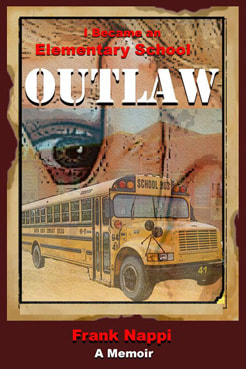
He vividly captures the heart of a universal experience: what it is like for a child trying to navigate the education system and what a huge difference a good–and bad–teacher can make. So much so, that the impact of those teachers still shapes our lives and behavior decades later. Frank Nappi exposes how a sensitive little boy becomes a childhood rebel — “I had small arms and shoulders and a huge reputation to lug around.” — and shares how this rebel grew up to become a successful teacher and author. Nappi brings to life how important it is for teachers — and adults — to truly “see kids” — how their simple encouragement can mean so much, and their careless indifference or outright cruelty can be so damaging. You’ll enjoy spending time with Frank Nappi and his recollections and epiphanies. His life story will surely resonate with your own. – John Owens, author of the bestseller Confessions of a Bad Teacher